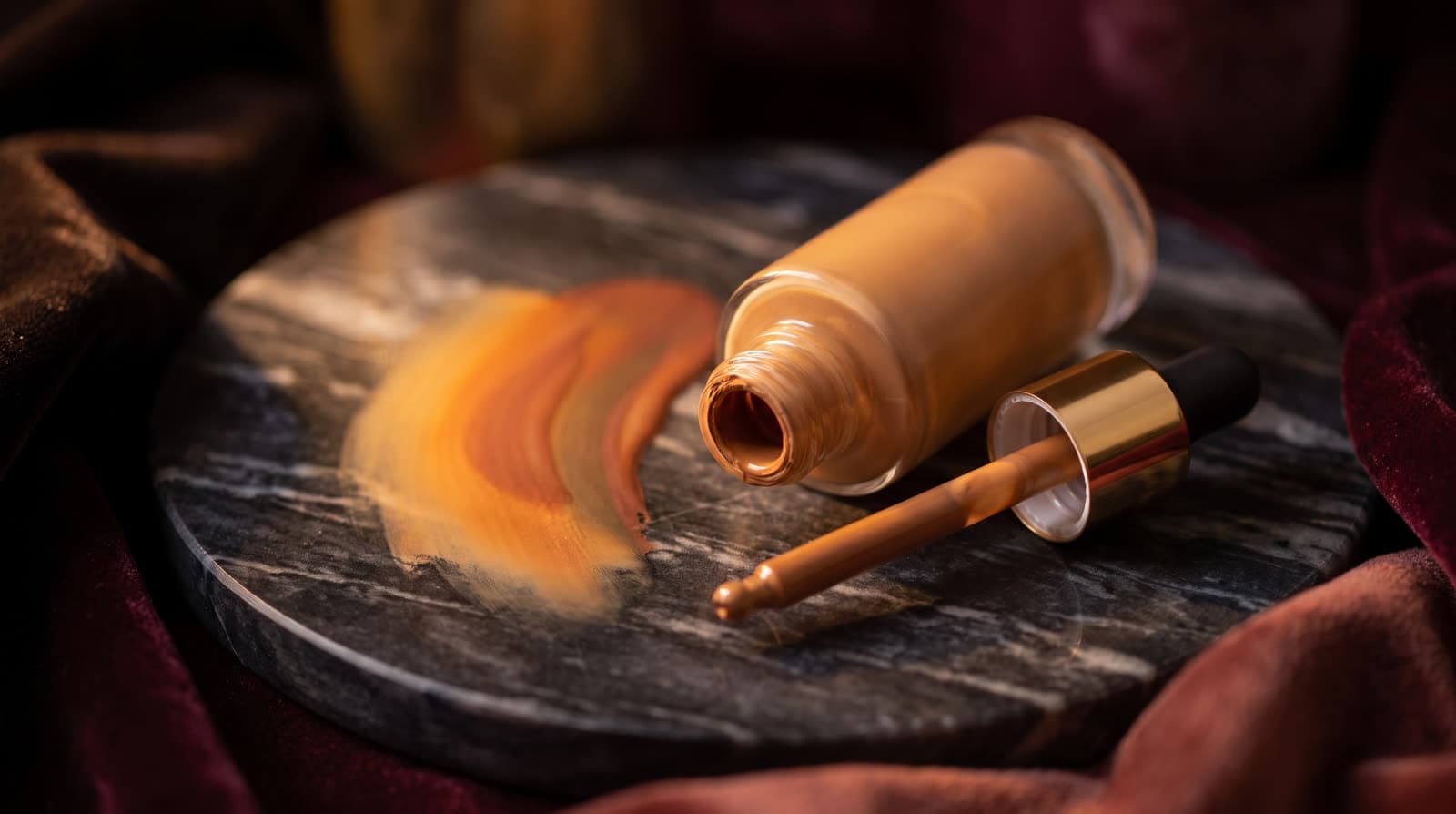
Concealer is the most-loved and most-misused product in the bag. Used well, it makes you look rested and even. Used heavily, it settles into every fine line by mid-morning. The difference isn't the product — it's three habits: the right amount, the right placement, and a light setting.
How do you apply concealer without it creasing?
Apply a thin layer of concealer only where you need coverage, blend by patting (not rubbing), and set lightly with a small amount of powder. Creasing is almost always caused by too much product and no setting — less concealer, gently set, stays put.
The instinct to pile it on backfires: excess product has nowhere to go but into your lines. Start with less than you think, build only if needed, and press a whisper of powder over it. Our L'Anticerne is buildable for exactly this — a little, layered, beats a lot at once.
Do you apply concealer before or after foundation?
Apply concealer after foundation. Foundation evens your overall tone first, which often means you need less concealer — then you spot-conceal only what foundation didn't cover. Doing it in this order prevents wiping concealer away when you apply foundation.
If you conceal first, your foundation application drags it around and you lose the coverage. Foundation (Le Fond de Teint), then targeted concealer, then set.
How do you apply concealer under the eyes?
Place concealer in a small triangle under the eye (point toward the cheek), pat it in with a warm fingertip or sponge, and set with the lightest dusting of powder. The triangle shape brightens and lifts more than tracing the lash line alone.
Use a shade a touch lighter than your skin to brighten, apply sparingly, and never rub — the under-eye skin is the thinnest on your face, so pat gently. A hydrated base (a little Le Contour first) stops it grabbing onto dry patches. [source: AAD]
How do you conceal a blemish?
Dab a tiny amount of concealer directly on the blemish (not around it), pat the edges to blend, and set with powder — for redness, a slightly more opaque, skin-matching shade works better than a lighter one. Precision beats coverage here.
The mistake is smearing concealer over a wide area, which highlights texture. Pinpoint the spot, blend only the edges, set, and it flattens into the skin.
What's the right amount and shade of concealer?
Use a small amount and a shade that either matches your skin (for blemishes) or is one shade lighter (to brighten under the eyes). Too-light or too-much concealer is what creates the obvious "reverse panda" look.
Match, don't over-brighten. A concealer that's a hair lighter under the eyes lifts; anything more reads as a bright patch. Build coverage in thin layers rather than one thick pass.
FAQ
Should concealer be lighter or darker than your skin? For under-eyes, one shade lighter brightens; for blemishes and general coverage, match your skin tone. Going too light anywhere creates an obvious patch rather than natural coverage.
Why does my concealer look cakey? Too much product, a dry base, or heavy powder. Use less concealer, hydrate the under-eye first, pat (don't rub), and set with a light hand. Cakiness is almost always excess.
How do I set concealer so it lasts? Press a small amount of finely-milled setting powder over the concealer with a small brush or sponge — just enough to set, not cake. This locks it in place and prevents creasing.
Do I need eye cream before concealer? A light, absorbed eye cream helps concealer glide and stops it clinging to dry lines — but let it sink in first, and keep it minimal so the area isn't slippery. Too much makes concealer slide.
How do I cover very dark circles? Hydrate first, use a peach/salmon-toned corrector under a skin-matching concealer for blue-toned circles, apply thin layers, and set. Building gently covers better than one heavy layer.
Divina's creamy, buildable concealer that brightens without creasing: L'Anticerne →
<!-- SCHEMA: Article + FAQPage. See PUBLISHING-GUIDE.md -->
References
- American Academy of Dermatology (AAD)
The secret to concealer that doesn't crease is less of it, placed where you need it, and set gently. Coverage is placement, not quantity.