Face oils have a reputation problem: half of people swear by them, half say they "do nothing" or cause breakouts. The split almost always comes down to a single misunderstanding — treating an oil as if it were a moisturizer. They're not the same tool, and knowing the difference is the whole game.
What's the difference between a face oil and a moisturizer?
A moisturizer hydrates — it adds and holds water in the skin. A face oil seals — it sits on top and slows water from evaporating, but it adds little to no water of its own. One provides water; the other locks it in.
This is why an oil alone can leave skin feeling coated yet still dehydrated: there was no water underneath for it to trap. An oil is an occlusive finishing step, not a hydrator. Our L'Élixir is designed as exactly that — the final, sealing gesture over a hydrated face.
Do you need both a face oil and a moisturizer?
For most skin, a moisturizer is essential and a face oil is optional but complementary — especially for dry skin, cold weather, or a compromised barrier. The moisturizer does the hydrating; the oil, added last, makes that hydration last longer.
Oily skin often does fine with a moisturizer alone. Dry or mature skin frequently benefits from both. It's not oil or cream — when you use both, it's cream then oil.
Face oil before or after moisturizer?
Apply face oil after your moisturizer, as the last step of your routine (or just before sunscreen in the morning). Because oil can seal water-based products beneath it but water can't penetrate through oil, the oil must go on top.
Put the oil on first and you effectively block your moisturizer and serums from absorbing. Last always — think of it as the lid, not a layer. (Full sequence: the order of skincare.)
Are face oils good for oily skin?
They can be — the key is choosing a lightweight, non-comedogenic oil and using only a few drops. Some oils suit oily skin and can even help balance it, while heavier ones may feel greasy or clog pores.
Oily skin can still be dehydrated (lacking water, not oil), so a light sealing oil over a water-based routine sometimes helps. Start with a drop or two at night and see how your skin responds.
How many drops of face oil should you use?
Use 2–4 drops for the whole face — warmed between the palms and pressed in, not rubbed. A little goes a long way; too much simply sits on the surface and feels greasy without adding benefit.
More oil is not more moisture. The job is a thin sealing layer, so restraint is the technique — as with most of skincare.
FAQ
Can a face oil replace moisturizer? No — an oil seals but doesn't add water, so on its own it can leave skin dehydrated. Use a moisturizer for hydration, then an oil to lock it in if your skin is dry.
Will face oil cause breakouts? It can if the oil is heavy or comedogenic, or if too much is used. Choose a lightweight, non-comedogenic formula and keep it to a few drops, applied last.
Do you use face oil in the morning or night? Either — but especially at night, as the final sealing step. In the morning, if used, it goes before sunscreen and you may prefer just a drop so it sits well under SPF and makeup.
Is a face oil good for anti-aging? Oils help skin look smoother and more supple by sealing in hydration, and some carry antioxidants — but they seal rather than resurface. For firmness, pair an oil with actives like peptides or retinol.
Which goes on first, oil or serum? Serum first, oil last. Water-based serums need to reach the skin before the oil seals everything in.
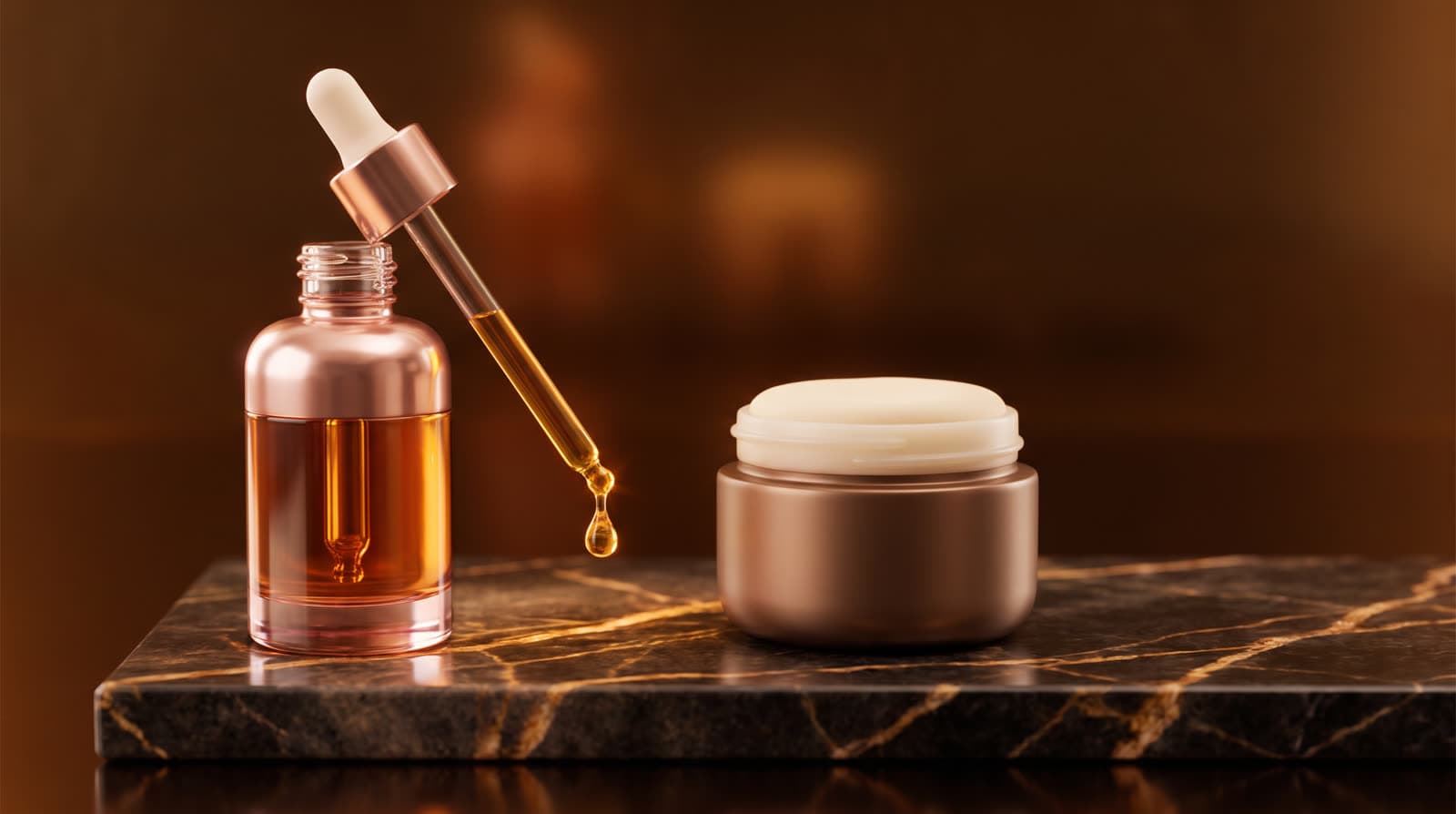
Divina's rose-gold sealing face oil, the final gesture of an evening: L'Élixir →. Layer it over La Crème.
<!-- SCHEMA: Article + FAQPage (mainEntity = the 5 FAQ items). See PUBLISHING-GUIDE.md -->
References
- American Academy of Dermatology (AAD)
- Cleveland Clinic — Health Essentials
A face oil doesn't hydrate. It seals. Understand that one distinction and you'll never misuse one again.