Cleansing seems too basic to get wrong — and yet it's where most routines quietly go astray, either by stripping the skin or by not properly removing the day. "Double cleansing" is having a moment as the fix, and for some people it genuinely is. For others it's a step too far. Here's how to tell which you are.
What is double cleansing?
Double cleansing is washing your face twice in a row at night — first with an oil-based cleanser to dissolve makeup, sunscreen, and oil, then with a water-based cleanser to clean the skin underneath. The idea is that one water-based wash can't fully remove sunscreen and long-wear makeup.
It comes from the reasoning that oil dissolves oil (makeup, SPF, sebum) while a water-based cleanser handles sweat and grime. Done gently, it leaves skin genuinely clean without needing to scrub.
Do you actually need to double cleanse?
You need it if you wear makeup, sunscreen, or heavy skincare — those don't fully rinse off with one water-based wash. If you wear none of those, a single gentle cleanse at night is enough. It's situational, not universal.
So the honest answer: double cleanse the days you wore SPF or makeup; single cleanse the days you didn't. Most people who wear daily sunscreen (as they should) benefit from it in the evening.
How do you double cleanse properly?
First, massage an oil-based cleanser (or balm) onto dry skin to melt makeup and SPF, then rinse; second, use a gentle water-based cleanser, then rinse with lukewarm water. Keep both gentle and brief — this isn't about scrubbing.
The second cleanser is where a well-formulated, non-stripping gel like Le Purifiant earns its place: it cleans thoroughly without leaving skin tight. Follow with your treatment or a hydrating essence (L'Essence).
Is double cleansing bad for your skin?
It can be if you over-do it or use harsh, stripping cleansers — two aggressive washes can damage the barrier, leaving skin tight, red, or oilier as it overcompensates. Done gently, once at night, it's fine for most skin.
The risk isn't the "double" — it's harshness and frequency. Two gentle cleanses at night won't harm you; two stripping ones will. And you never need to double cleanse in the morning.
How do you choose a cleanser for your skin type?
Choose by feel after rinsing: skin should feel clean and comfortable, never tight or squeaky. Oily/combination skin suits a gentle gel or foaming cleanser; dry/sensitive skin suits a cream or non-foaming gentle wash. Avoid anything that leaves you "squeaky" — that's stripped.
- Oily/combination: gentle gel or foaming (like Le Purifiant).
- Dry/sensitive: cream or gentle non-foaming.
- Everyone: lukewarm water, not hot; brief, not scrubbing.
FAQ
Should you cleanse your face in the morning? A gentle morning cleanse (or just water) is fine for most people — you're removing overnight oil and product, not a day's grime, so keep it light. Skip double cleansing in the morning; it's an evening step.
Do you need to double cleanse if you don't wear makeup? Not usually — if you wear no makeup or sunscreen, a single gentle cleanse at night is enough. If you wear daily SPF (recommended), a double cleanse in the evening helps remove it fully.
Is it bad to wash your face twice a day? No — morning and night is the standard and works well. It's over-washing (more than twice, or with harsh cleansers) that strips skin and can trigger more oil. Twice, gently, is right.
What's the difference between an oil and a foaming cleanser? Oil-based cleansers dissolve makeup, SPF, and sebum; water-based/foaming cleansers remove sweat and general grime. Double cleansing uses one of each; many people are fine with just a good gentle water-based cleanser.
Why does my skin feel tight after cleansing? It's being stripped — the cleanser is too harsh or the water too hot. Switch to a gentle, non-stripping cleanser and lukewarm water; skin should feel comfortable, not tight, afterward.
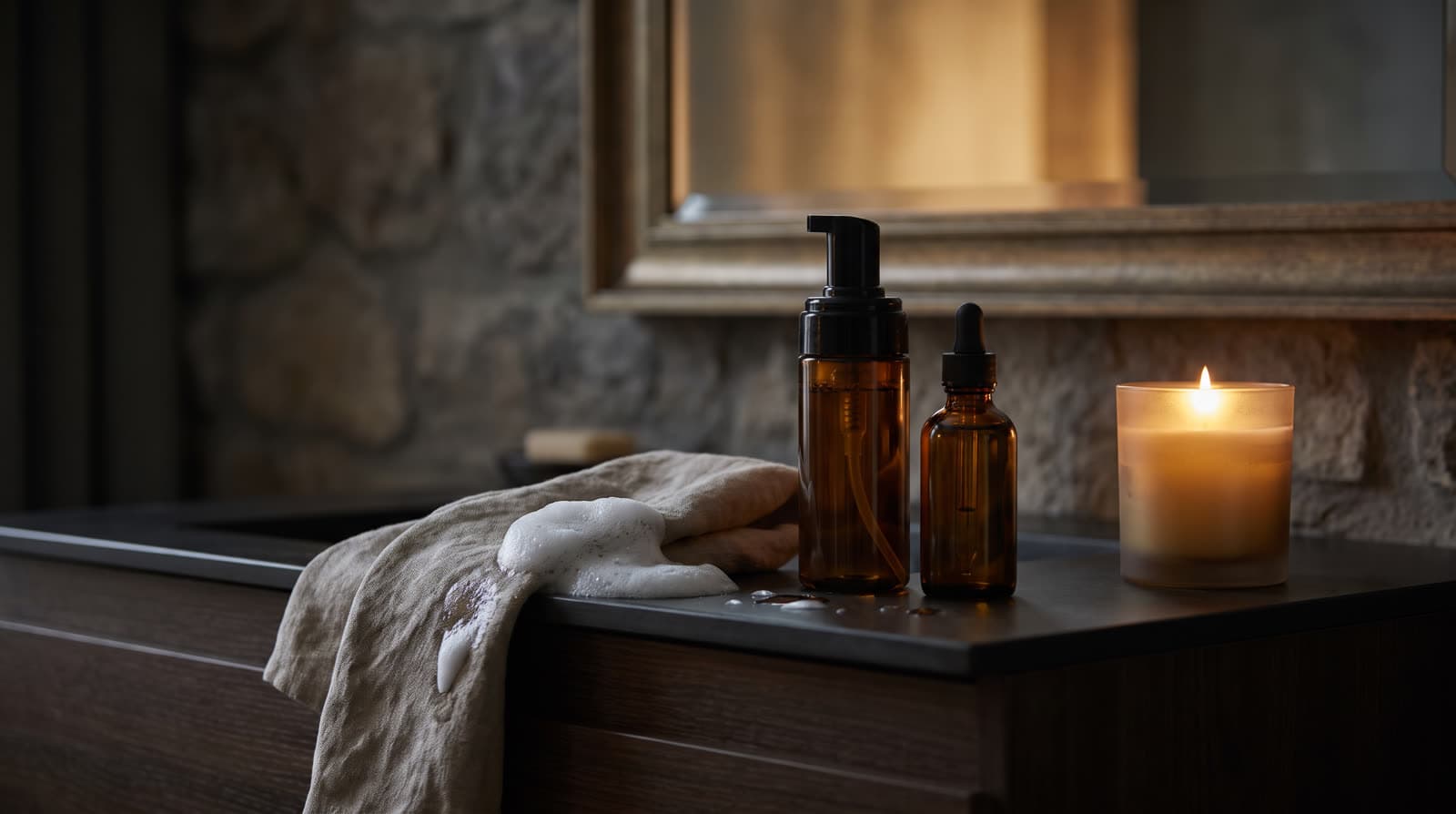
Divina's gentle foaming cleanser — where the ritual begins: Le Purifiant →
<!-- SCHEMA: Article + FAQPage. See PUBLISHING-GUIDE.md -->
References
- American Academy of Dermatology (AAD)
A cleanse should remove the day, not the skin's own defenses. Clean is the goal; stripped is the mistake.